
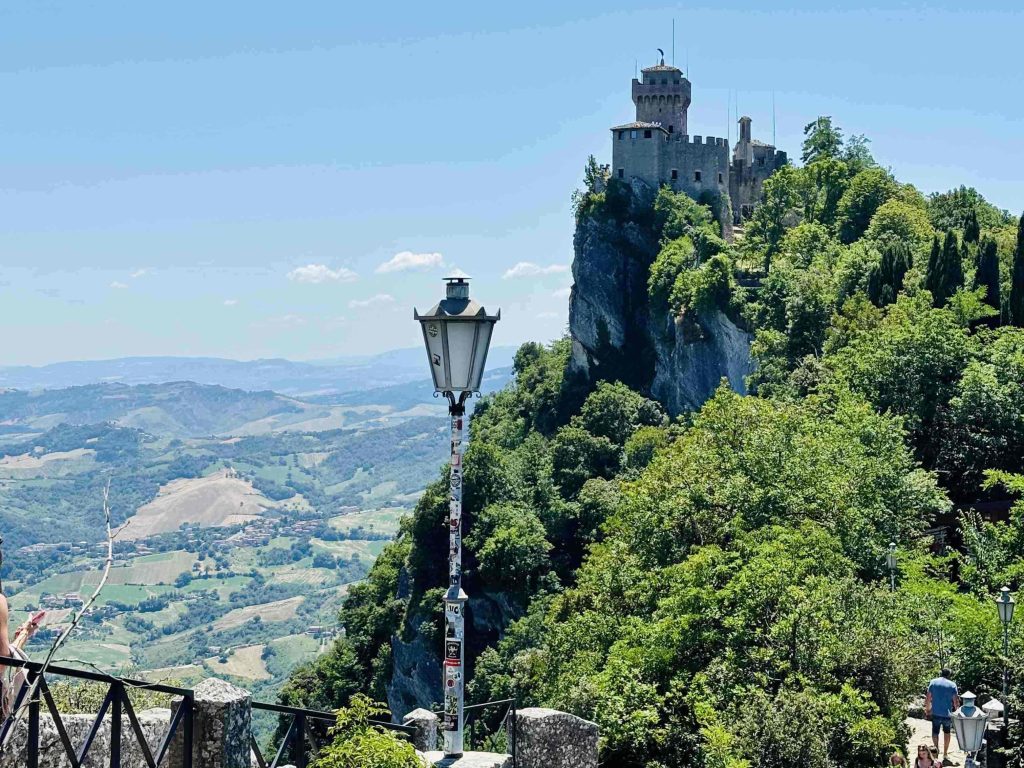
So, you’re in Italy—maybe eating your weight in pasta in Bologna or lounging on the beaches of Rimini—and you see a massive rock formation jutting out of the landscape in the distance.
That isn’t just a mountain. That is the Republic of San Marino, the fifth-smallest country in the world and the oldest sovereign state still in existence.
A Country on a Mountain
San Marino is tiny—just 61 square kilometers—but it doesn’t feel small when you’re here. The republic is built around Monte Titano, a rugged limestone peak rising sharply from the rolling Romagna countryside. The capital, also called San Marino, clings to the upper slopes like something out of a storybook: stone walls, narrow alleys, and towers that watch over everything.
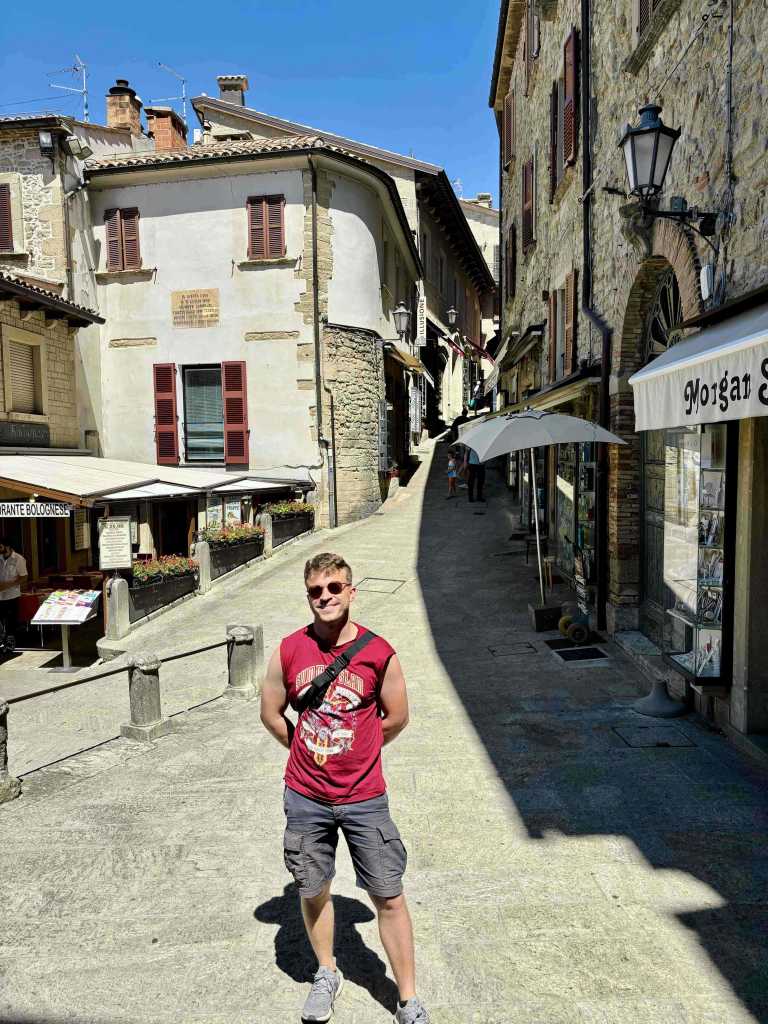
Unlike many European capitals, this isn’t a place you “do” by checking off a list of museums. It’s a place you wander. Up staircases that seem to go nowhere. Through arches that suddenly reveal entire valleys. Along old defensive walls that feel more like scenic walking trails than fortifications.
The higher you climb, the more the modern world falls away, until all that remains is rock, sky, and silence.
The Three Towers: Guardians of the Republic
If San Marino has a signature image, it’s the silhouette of its Three Towers balanced along the ridge of Monte Titano. You see them on flags, coins, logos—and then one day, you see them in person and understand why an entire country has wrapped its identity around them. Experience the magic of San Marino: a walking tour with a certified guide and 7 museums included in the pass
I. Guaita – The First Tower
Guaita, the oldest and most famous tower, dates back to the 11th century. Built directly into the rock, it looks like a film set: angled walls, battlements, and dizzying drops just beyond the stones. You can climb inside, wind your way up tight staircases and ladders, and emerge onto the ramparts.
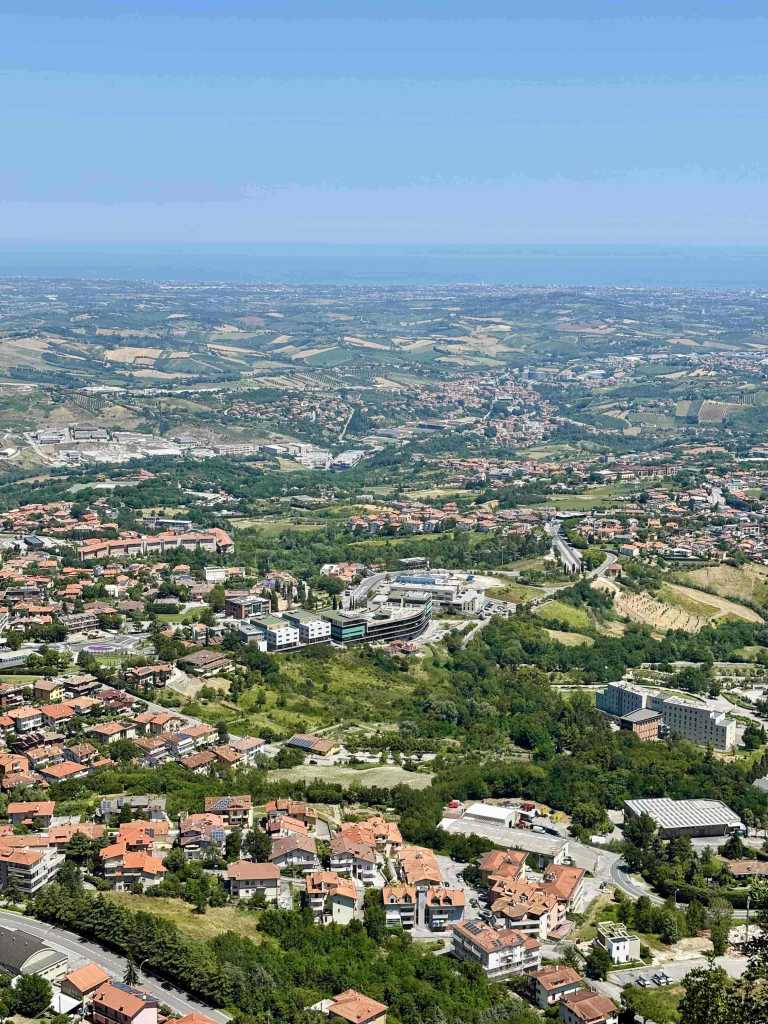
From here, the view is simply outrageous: patchwork fields in every shade of green and gold, red-roofed Italian villages, distant mountains, and, on a clear day, a faint shimmering line that is the Adriatic Sea.
It’s easy to imagine lookouts once scanning this same horizon for approaching enemies. Today, the only attacks come from cameras.
II. Cesta – The Second Tower
Continue along the ridge path—known romantically as the “Witches’ Path” for the legends it inspired—and you reach Cesta, perched on the highest of Monte Titano’s three peaks.
Cesta houses the Museum of Ancient Arms, a compact but surprisingly engrossing collection of weapons: crossbows, rifles, pistols, swords. Each piece is a reminder that this peaceful little republic survived centuries of conflict by taking its security seriously.
Even if old weaponry isn’t your thing, Cesta’s balconies might win you over. From here, the terrain drops away on both sides: mountain slopes, forests, hill towns, and that endless rolling countryside.
III. Montale – The Third Tower
Montale, the smallest and most secluded of the three, doesn’t have a museum or interior access. What it offers instead is atmosphere. To reach it, you follow quieter wooded paths away from the main tourist routes. There’s birdsong, shade, and a feeling of being far from everything.
Montale once served as a prison tower, its only entrance several meters above ground. Today it stands as a steadfast stone witness to the republic’s long, improbable story.
Inside the Old Town: Stone, Stories, and Small Details
When you’re not gazing out from the mountaintop, the magic of San Marino happens in the details under your feet and at your fingertips.
I. Piazza della Libertà & Palazzo Pubblico
The heart of civic life is Piazza della Libertà, a small but elegant square framed by cafés and dominated by the Palazzo Pubblico, the neo-Gothic government palace. This is where official ceremonies are held, where the Captains Regent (San Marino’s twin heads of state) are inaugurated twice a year.
If you visit in warmer months, you can watch the ceremonial changing of the guard. The guards, in their bright uniforms and feathered hats, add a theatrical touch to the square.
Take a seat at a café, order an espresso or a spritz, and just watch life unfold: locals greeting each other, children weaving around tourists, the sun sliding slowly along the pale stone walls.
II. Basilica di San Marino
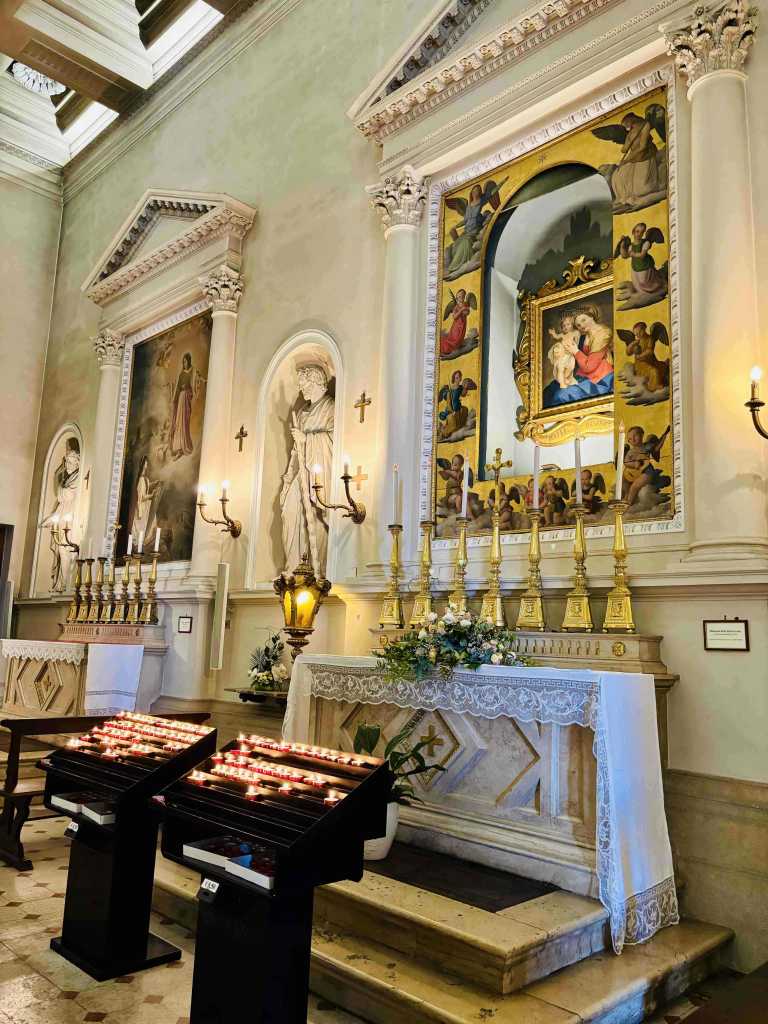
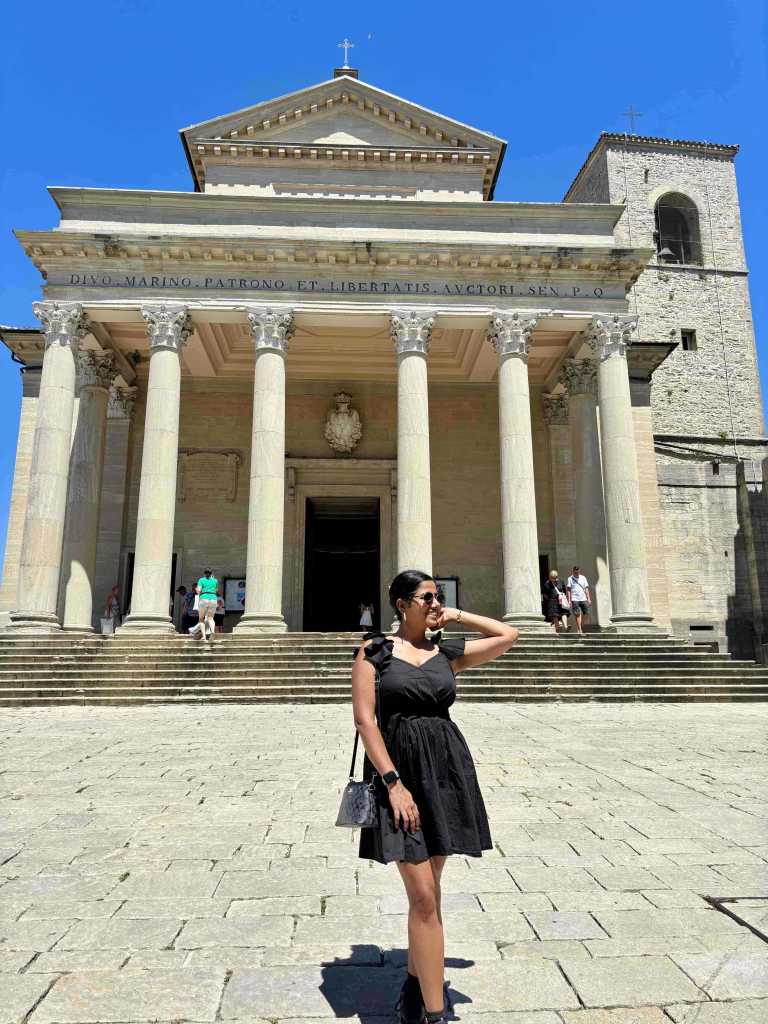
A short walk from the square takes you to the Basilica di San Marino, dedicated to Saint Marinus, the stonemason who supposedly founded the republic in the year 301. The basilica’s neoclassical façade and columned interior feel more refined than dramatic, but there’s a quiet dignity here.
Below the altar lie the relics of Marinus himself. Whether or not you’re religious, standing in a building that connects so clearly to the origin of an entire country is a powerful experience.
III. Streets Made for Wandering
San Marino’s historic center is a UNESCO World Heritage Site, and it’s easy to see why. The tangle of alleys, archways, staircases, and viewpoints feels almost theatrical—yet it’s still a working town, not just a preserved museum.
You’ll pass:
- Tiny craft shops selling ceramics and glass
- Stores offering San Marino’s famously collectible stamps and coins
- Boutiques with leather goods, perfumes, and local wines
- Restaurants whose balconies seem to hang in mid-air over empty space
It’s touristy in parts, yes—but step a street or two away from the main flow, and you’ll find quiet corners where laundry hangs between windows and cats nap on sun-warmed stone.
You can experience the magic of San Marino in a walking tour with a certified guide showing 7 museums and along with tower pass included (2 towers entry pass included) with your exclusive discount here- San Mario Guided Tour (Get your Guide).
A Microstate with a Macro History
San Marino claims to be the world’s oldest surviving republic, and it guards that title with pride. Founded, tradition says, by a Christian stonemason seeking refuge from persecution, the country has somehow maintained its independence through the rise and fall of empires, kingdoms, and modern nation-states.
During Italy’s unification in the 19th century, San Marino offered refuge to supporters of Giuseppe Garibaldi. In both World Wars, it managed to stay neutral. More recently, it has reinvented itself as a peaceful, prosperous microstate with an outsized seat at international tables.
You feel this sense of continuity everywhere: in the official coats of arms carved into buildings, in the carefully preserved archives and museums, in the quiet confidence with which locals talk about their country.
San Marino may be small, but it has never thought of itself as insignificant.
Eating (and Drinking) on the Edge of the World
San Marino’s cuisine closely mirrors that of its Italian neighbors in Emilia-Romagna and Le Marche, but with a few local twists and specialties.
Look for:
A. Piadina sammarinese – Local flatbread wrapped around cured meats, cheeses, and greens. Simple, but if done well, unforgettable.
B. Passatelli – Rustic pasta made from breadcrumbs, eggs, and cheese, usually served in broth or with a light sauce.
C. Game dishes – Rabbit, boar, and other country-style specialties on some menus.
D. Torta Tre Monti – A layered wafer-and-chocolate cake inspired by the three towers, rich but not cloying.
E. Local wines – Especially reds made from Sangiovese grapes grown on the surrounding hills.
The real luxury is the setting. Many restaurants and cafés come with panoramic terraces. There’s something special about sipping a glass of red while looking out over three regions of Italy, knowing that you are, technically, in a completely different country. You can also have a traditional cuisine tasting experience in Restaurant Cesare with your exclusive discount code- Tasting of the Romagna tradition in the heart of San Marino.
Practicalities: Making San Marino Part of Your Trip
I. Getting There
San Marino has no airport or train station. The easiest access is via Italy:
A. By bus: Regular buses run from Rimini (train station) to San Marino’s historic center. The ride takes around an hour and winds up through increasingly dramatic scenery.
B. By car: You can drive up and park in one of the multi-level parking areas below the old town. From there, escalators and paths lead you upward.
C. Take a guided tour from Italian town of Bologna. Here are your exclusive discount codes- From Bologna: Private San Marino Day Tour with Lunch
II. How Long to Stay
Many visitors come on a day trip from Rimini, Bologna, or elsewhere in northern Italy—and that’s certainly doable. You can see the main sights in a well-planned day.
But staying overnight has its rewards:
- The crowds drain away in late afternoon.
- The old town glows in golden light at sunset.
- Nighttime walks along the walls and towers feel almost otherworldly.
If your schedule allows, spending one night gives you a chance to experience both the lively and the contemplative sides of San Marino.
III. Money, Language, and Logistics
A. Currency: Euro (€).
B. Language: Italian is the official language; many people in tourism speak at least some English.
C. Entry: There’s no border control when coming from Italy. If you’re a passport-stamp collector, you can get a decorative San Marino stamp at the tourist office for a small fee.
D. Season: Late spring and early autumn are ideal—pleasant temperatures, clearer views, and fewer tour buses than in peak summer.
Why San Marino Stays With You
San Marino doesn’t overwhelm you with size or spectacle. Instead, it works more quietly: a combination of altitude, history, and intimacy.
In a world of capital cities and famous landmarks, San Marino is something rarer: a place that still feels like a discovery. If you find yourself in northern Italy, leave a day—or better, a night—for this mountain republic. Climb its towers, wander its lanes, let the views unspool in front of you.
You might arrive thinking you’re just checking another country off a list. You’ll leave understanding that San Marino is much more than that: a tiny state with a huge sense of self, floating forever between earth and sky.
Recommended Paid Activities
I. San Mario Guided Tour (Get your Guide)– Experience the magic of San Marino: a walking tour with a certified guide and 7 museums included in the pass (including 1st & 2nd tower entry).
II. Tasting of the Romagna tradition in the heart of San Marino– In this stylish restaurant with specialties of Romagna in the center of San Marino you can enjoy excellent dishes, created from the encounter of the local tradition with the always evolving gastronomic research.
III. From Bologna: Private San Marino Day Tour with Lunch– When you don’t have a private car and have a day in Bologna, then this is the best option to add a new country in your list which will mark its imprint forever in your heart.
Download get your guide app to avail your exclusive discount- https://gyg.me/explorersecho-app
Discount Code- EXPLORERSECHO5

 Explorer's Echo